How the 21st century reinvented neuroscience
Revolutionary advances such as optogenetic neuronal control and brain-computer interfaces are transforming our understanding of the brain, as well as opening up new possibilities in the research and treatment of neurological disorders.
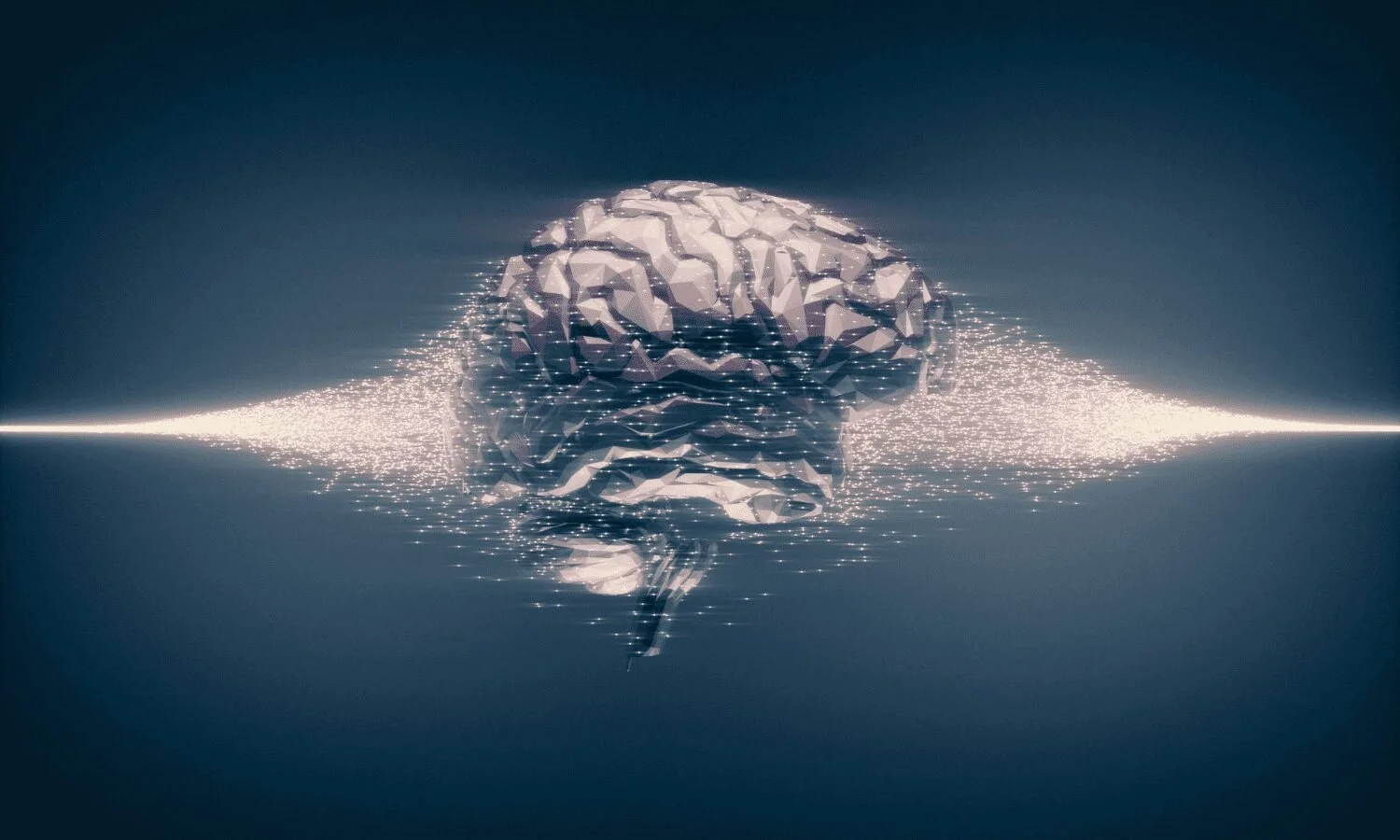
They say that when humans study the brain, it is actually the brain trying to study itself. Perhaps this is the most poetic way to describe neuroscience, a branch of research that didn't solidify as such until almost the 20th century. Its very beginning is marked by a Spanish physician, Santiago Ramón y Cajal, and a groundbreaking work that earned him the Nobel Prize: the discovery of neurons.
It was a turning point in the development of science, and since then, countless researchers have been trying to answer the questions of the human mind, uniting disciplines such as medicine, psychology, biotechnology, and philosophy, among others, with a common goal. That's why the 21st century (even though we're not even a quarter of it) is proving to be an era of exploration, discoveries, disappointments, but above all, advances that could easily belong to futuristic fiction.
Optogenetics
Optogenetics, broadly speaking, is a procedure that allows the control of specific neurons using light. It involves introducing proteins (called opsins) into certain neurons in the brain. Opsins are light-sensitive and act like switches; that is, they can be turned on and off by pulses of light.
So, when light strikes the opsins, the neurons that carry them increase or decrease their activity. Because the timing and location of the light stimulation can be precisely controlled, scientists can manipulate neuronal activity in real time. In this way, it is possible to investigate the causal relationship between certain patterns of neuronal activity and behavior.
So, how is it possible to illuminate neurons located inside the skull? Precisely for this reason, optogenetics is currently only practiced in animals, especially rodents. This is because, since the light must be directed onto the neurons, the animal's skull must be drilled to connect the light source. In short, optogenetics, which is no more than 20 years old, has revolutionized neuroscience because it provides unprecedented control over neuronal activity and is allowing, for the first time, the identification of the neural circuits responsible for learning, decision-making, and motor control.
Neuroplasticity in Adults
The concept of neuroplasticity existed before the 21st century. However, neuroplasticity has always been discussed in relation to children, and it is only now that its importance in adults is beginning to be understood. This term refers to the brain's ability to reorganize its structure and function in response to learning, experience, injury, or simply changes in the environment.
What makes the current notion of neuroplasticity so fascinating is that it challenges the long-held idea that both brain structure and function are fixed in adulthood. Numerous studies this century have shown that the adult brain remains highly adaptable and capable of reconfiguring itself in response to diverse experiences.
So why wasn't this discovered earlier? For the same reason that nothing was known about cells before the invention of the microscope: a lack of tools. Currently, techniques such as functional magnetic resonance imaging (fMRI) and diffusion tensor imaging (DTI) allow us to explore previously uncharted territory. The former allows us to observe changes in brain activity while participants perform different cognitive tasks. The latter allows us to visualize the structure of nerve fibers in the brain, which is useful for studying structural plasticity and changes in the connectivity of neural pathways.
As plasticity is understood today, thanks to new research tools, the human mind can be studied from a completely different angle, opening doors to new discoveries about how we learn, how memory works, how we recover from brain injury, and how some psychiatric or neurodegenerative disorders develop.
Brain-Computer Interface (BCI)
Imagine being able to write an email simply by thinking, set up a washing machine, or operate an exoskeleton like the one worn by Dr. Octopus, Spider-Man's eternal villain. This is the main objective of BCIs: to establish direct communication between the brain and external devices. Despite the dystopian challenges this idea may present, this advancement is contributing enormously to the development of, for example, neurorehabilitation, prosthetics, and assistive technology.
How are these technologies implemented? The first step is to record brain activity using techniques such as electroencephalography (EEG) or electrodes implanted directly in the brain. Each type of cognitive process has a distinct signal pattern. Therefore, these signals are decoded using complex algorithms that can associate each signal pattern with specific mental states or movements. The decoded message is then translated into commands for the external device, which, if all goes well, should execute them.
Furthermore, brain-computer interfaces typically have a feedback system that informs the user of the results of their commands or helps the machine learn to obey more effectively. It's an advancement that any scientist of past centuries would have dreamed of, in which neuroscience, computer science, artificial intelligence, and engineering collaborate to maximize its potential. Currently, it's helping people with physical disabilities and, above all, understanding how the human mind works.
These are just three examples of the neuroscience boom of our century, but there are many more, some with impressive names like two-photon microscopy or magnetic resonance spectroscopy, and others with a more philosophical focus, such as understanding human consciousness or the clinical use of psychedelics.
Neuroscience is still a nascent field compared to other sciences. Currently, methods for observing what is truly intended are still being refined, and these methods need to be reliable enough to establish causal relationships between thought, behavior, and neuronal activity.