The virtue of forgetting
Although it may seem like a cognitive limitation, letting go of memories is part of how the brain works. It helps maintain a coherent and positive self-image, categorize knowledge, and develop a more creative worldview.
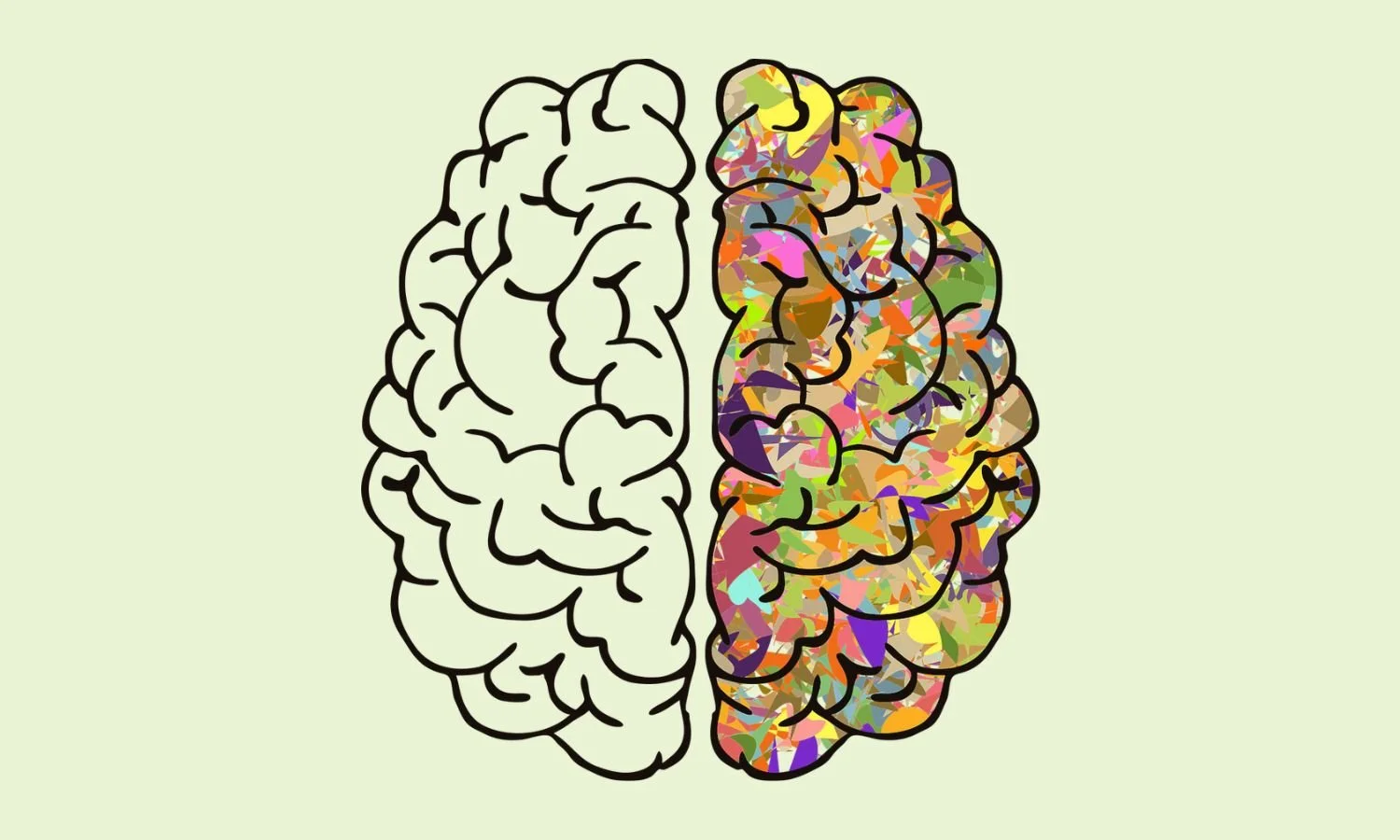
How infuriating, this memory of mine, that has forgotten the capital of Sweden and the last ingredient in paella. How infuriating, even more so, to forget the face of my first friend, the smell of my grandmother's house, and the street where my heart was broken. How infuriating it is to forget, but above all, to be forgotten.
Often, forgetfulness is experienced with helplessness, shame, pain, and frustration, leading to the belief that it is a sign of cognitive decline or a character flaw. In the end, human limitations are perceived as just that: limitations, to be overcome through biological evolution or technology. Who wouldn't want an infinite and super-precise memory? However, its structure and function have been in constant development for tens of millions of years, and if there's one thing we can be sure of, it's that almost everything has a reason.
In this case, American psychologists Jonathan M. Fawcett and Justin C. Hulbert authored a detailed article on the advantages of memory's fragility, especially useful in our daily lives. Fawcett and Hulbert suggest that forgetting has seven virtues in total, organized into three distinct roles: the guardian, the librarian, and the inventor.
What intensity adolescent love offered us, and what a bittersweet intensity it was. We hurt others and were hurt in return. We betrayed and were betrayed, even vowing revenge for suffering that, to this day, has vanished. Forgetting distances us from the emotional consequences of past events, either because the memory becomes inaccessible or because the emotional properties are dulled. Forgetting—with its guardian aspect—facilitates forgiveness, helps us overcome past actions, and motivates us to move forward despite adversity. Forgetting, therefore, is serenity, which is the first virtue. The second is stability, since forgetting eliminates details from our past where we were inconsistent with our understanding of the world: a rude gesture toward a mother, a controversial political opinion, or a minor offense during a night of excess with friends, for example.
Amnesia also takes on the role of a librarian, organizing our knowledge on mental shelves. When we forget, we rid ourselves of mundane experiences, of details that will likely be useless in the future. For memory to exist, it must be functional. Likewise, forgetting allows us to update the "chapters" of our lives, maximizing the relevant parts. The final virtue of forgetting—as a librarian—is abstraction, that is, the ability to gather the common experiences from those vital chapters to improve the foundation of our knowledge.
The inventor, the driving force of creativity: What do some writers do when they have writer's block and can't develop their story? They abandon it for a time, forgetting it and its characters, only to return to them later with a different perspective. In this way, forgetting plays the role of an inventor with two major tasks: inspiration and rediscovery. On the one hand, it helps us limit our preconceptions of the past, allowing us to identify creative solutions to new problems. On the other hand, it motivates us to reconnect with past activities and people through nostalgia. Thanks to forgetting, what once mattered to us can bloom again. How else could Proust have enjoyed a simple madeleine so much?
Forgetting at an inopportune moment can certainly be unpleasant. However, remembering can be too. Thus, amnesia can be useful for our proper psychological development, even if it is a process that goes unnoticed. Perhaps that is precisely why forgetting is so undervalued: when it bothers us, we notice it, but when it works, we fail to recognize its merit. In conclusion, the best memory system is not the one that remembers absolutely everything, but the one that regulates access to information according to the needs of the environment.