DNA, the recipe for who we are
These molecules, mostly found in the nuclei of our body's cells, contain the information that determines how an individual develops.
Sugar, spice, and everything nice? For cartoon fans, this mix might sound familiar. However, the ingredients needed to create a standard individual are far more complex than what Cartoon Network offered.
In this real-life process, no one is stirring a pot, but if this were a useful analogy, the cook would first need a large recipe book. This book would be equivalent to cells, the basic units of life, which not only create it but also maintain it from birth to death. Now, cells, like a book, are more valuable for their content than their container. Thus, each page of the book, with its text and illustrations, is DNA.
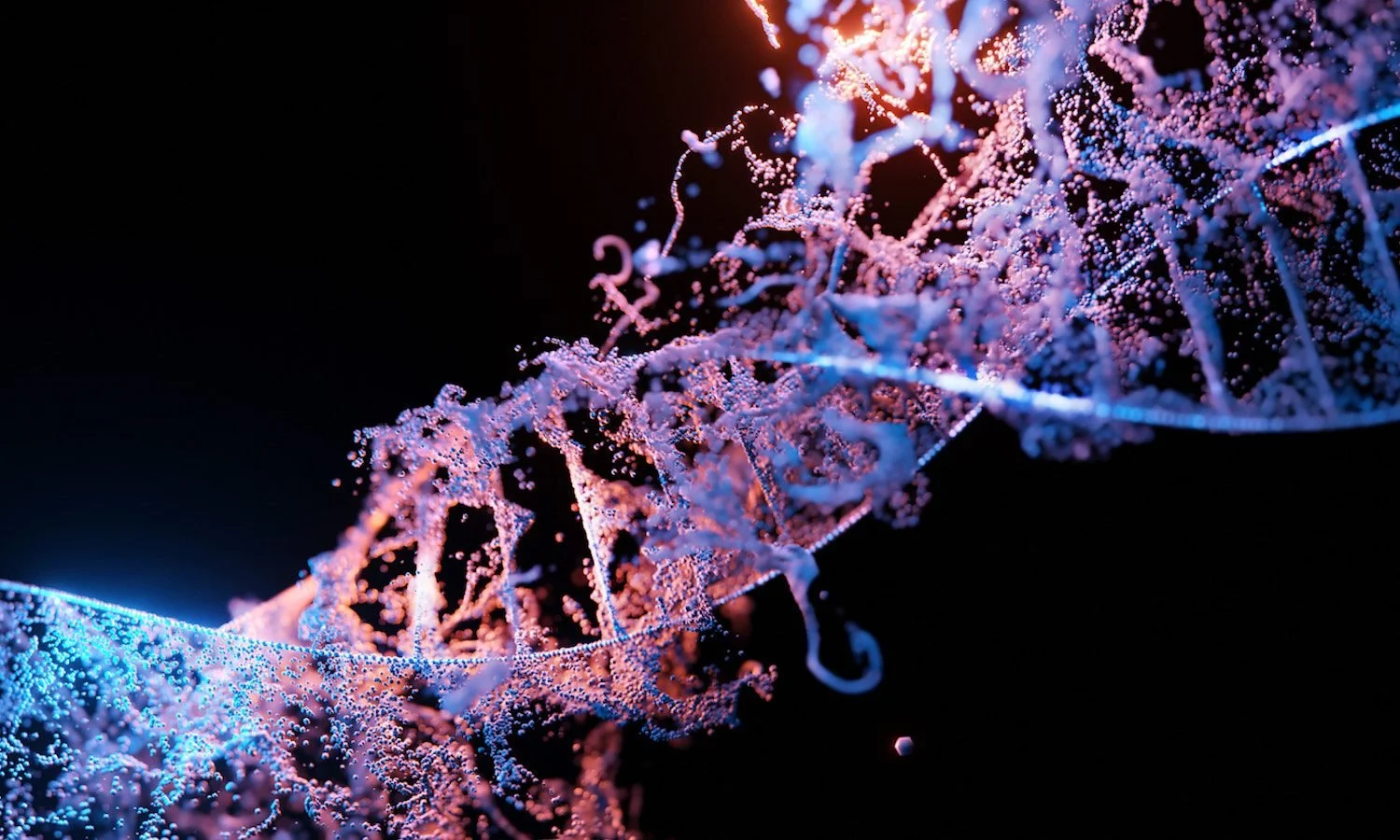
DNA (an acronym for "deoxyribonucleic acid") is a molecule found primarily in the nucleus of cells throughout the human body. It has the shape of a double helix and resembles a kind of coiled ladder, and that's where genetic information is found, such as eye color or susceptibility to certain diseases. The genetic code is specifically located on the rungs of that ladder, called nucleotides. If all the pages of the recipe book were followed, the result would be the formation of an individual. Likewise, DNA is contained within X-shaped packages called chromosomes. Each person has 23 pairs of chromosomes in each cell, 46 in total. However, sperm and egg cells, which are also cells, have half that number. This reduction is essential to maintain the correct number of chromosomes after fertilization, when they combine to create a new individual. In culinary terms, while cells are the recipe book itself and DNA are the pages, chromosomes are the chapters or sections, separated, for example, into appetizers, main courses, desserts, and cocktails.
When you take DNA from any chromosome, stretch it out, and select a section, you see a gene. After all, genes are segments of DNA that carry out very specific tasks in the body, such as when the body should or shouldn't produce insulin. Genes, then, are like specific recipes on a particular page and in a specific section, like "steps to make a cheesecake" in the dessert section. So, the hypothetical Professor Utonium, following the instructions dictated by the genes, would create a cake he would call proteins. Proteins are large molecules made up of chains of amino acids, and they are responsible for almost all the tasks of cellular life: they guide the formation of bones and organs, contribute to metabolism, digestion, and other biochemical processes, defend the body against infections, regulate hormones…
However, how does DNA become a protein? Or, in simpler terms, how does a page in a book become a cake without a real baker involved? This process is called gene expression. It occurs within cells and has two phases: transcription and translation. In transcription, an enzyme—RNA polymerase—reads the DNA written in a specific gene. Then, RNA polymerase creates a copy of that DNA sequence in the form of a molecule called messenger RNA (mRNA). This molecule serves as a temporary copy of the gene's instructions. Following this process, there is translation: the mRNA sequence is converted into (or translated into) a chain of amino acids. Depending on how the amino acids combine and how that chain folds, a different protein is formed. More simply put, gene expression could be like the chef who gets their hands dirty to bring the information from the book to life.
Finally, it's important to keep in mind that this description of life is greatly simplified, as gene expression and all the underlying processes are much more complex than any popular science representation. Even so, what is clear is that the recipe for what we are is far more fascinating than that of the Powerpuff Girls, even if they could fly.