Having everything and feeling nothing
Chronic dissatisfaction also affects the privileged, who despite being able to fulfill all their material desires feel an existential void that they cannot get rid of.
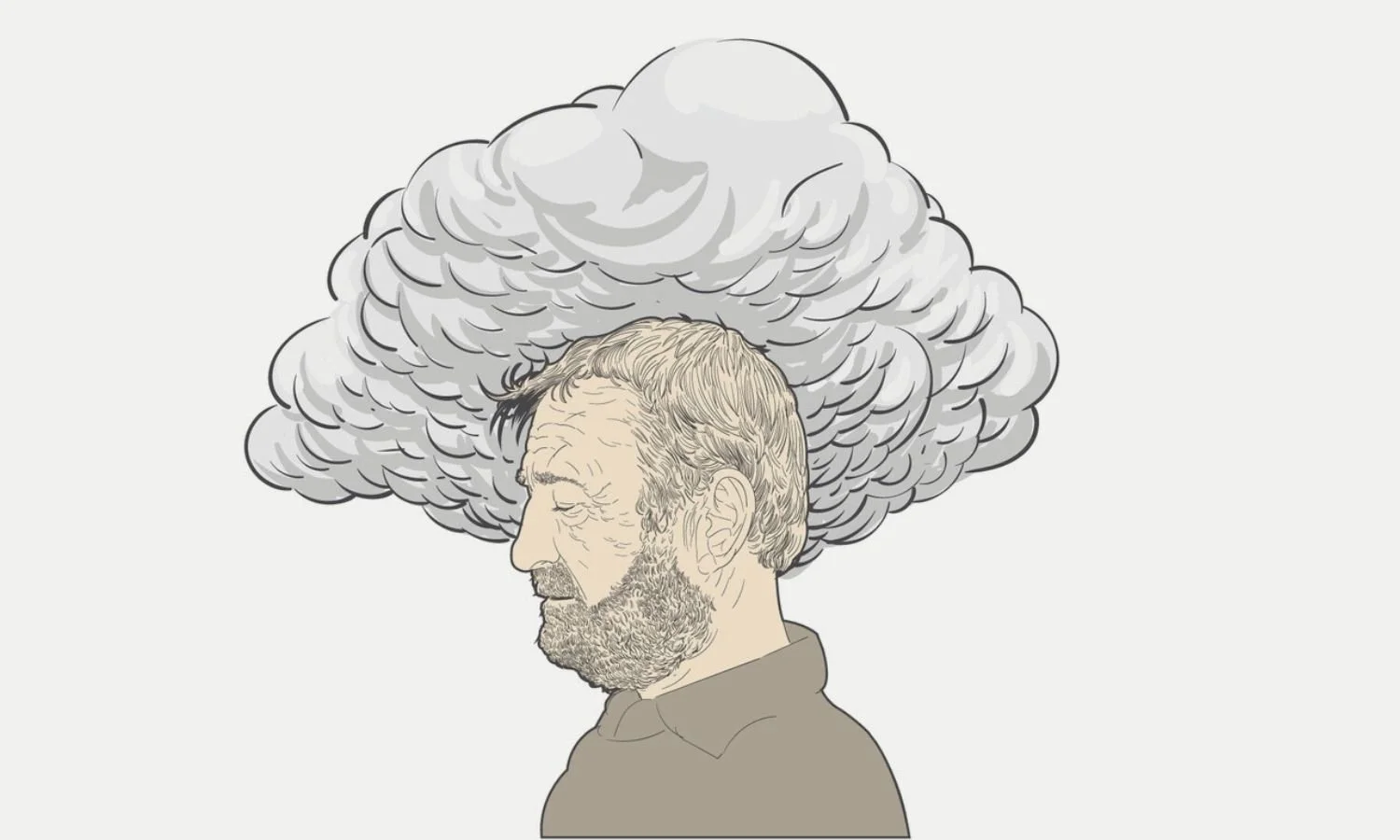
How many philosophers of the past, despite belonging to the highest nobility, lived in anguish over the lack of "something" they could never define? Their texts not only show that knowledge can generate frustration—depending on who possesses it and how they use it—but also that material wealth is not a sufficient condition to avoid existential torment.
People, regardless of their socioeconomic status, possess a "baseline" level of well-being that tends to be constant. This means that when they experience a significant change in their lives, whether positive or negative, they soon adapt to their new circumstances and return to their original level of happiness. In the words of Jean-Jacques Rousseau, "Comforts, when they become habitual, cease to be pleasurable."
This phenomenon is called hedonic adaptation. It differs in each individual and explains why lasting happiness requires a deeper understanding of how the human mind processes experiences. Therefore, if an individual has a low baseline level of well-being, it doesn't matter how much their material possessions increase, since the satisfaction will be short-lived and their increased happiness rarely lasts. If the baseline is so low that the individual feels dissatisfied all the time—even in circumstances that could be considered objectively good—then it's called chronic dissatisfaction.
It's understandable that those who start from an unfavorable socioeconomic situation have fewer resources to enjoy a stress-free life. However, one of the peculiarities of chronic dissatisfaction is that it also affects the privileged. Does it make sense that the most fortunate can be less happy than the rest? One might speculate that they have more free time and, therefore, more time to wallow in their thoughts. However, the causes seem to be more social than individual. In the system we live in, it has always been said that with attitude and perseverance, anything is possible. The capitalist bubble encourages us to break down barriers and pursue dreams that know no limits. It's a promising possibility, especially for those with the resources to choose their academic, professional, or social future, but putting it into practice isn't so simple.
Sometimes, the object of desire cannot be satisfied, and instead of acknowledging this, the mistake is made of continuing to fantasize about a hypothetical future instead of focusing on the appeal of the present. At some point in history, fantasy became synonymous with peace of mind, and to mitigate the disappointments of this perspective, humans established a "liquid" society (a term coined by sociologist Zygmunt Bauman) in which the immediate satisfaction of material needs is sought to keep the individual yearning for "what could be." This modus operandi works quite well in the 21st century, but some people, when reflecting on their existence, still feel that their lives are predefined by social expectations, rather than making choices that allow them to enjoy "what is now."
Likewise, people tend to compare their circumstances with those of their reference group, which is usually similar socioeconomically. For example, a family living in a 300-square-meter house with a pool and garden might realize that everyone in their neighborhood lives in at least 600 square meters, which can trigger feelings of inferiority and, consequently, make them feel they don't measure up to certain standards of success. In psychology, this feeling is popularly known as Beverly Hills syndrome.
Thus, the privilege one attributes to oneself depends more on whom one compares oneself to than on statistical values. This makes it essential, now more than ever, to be aware of the world around us. After all, a large portion of Western citizens can fulfill the needs that Maslow proposed in his famous pyramid (physiological, safety and security, esteem, and self-actualization needs), and that is an unattainable privilege in far too many communities around the world.
That said, having "everything" is not incompatible with feeling unhappy, since material possessions do not prevent social pressure, lack of purpose, emotional disconnection, fear of failure, or any other condition that pushes many people, with luck, into existential emptiness, and with less luck, into mental health disorders.